
When a Valdosta homeowner calls about a ceiling stain, the shingles are usually fine. Water got in where the roof changes direction or where something sticks through it, which means the flashing failed. Fall is the window to deal with that, because South Georgia winters bring long soaking rains that find every weak detail.
Flashing Fails Long Before the Shingles Do
Flashing is the metal that seals the joints. It goes where a chimney meets the roof, where a wall runs into a slope, where two planes form a valley, and around every vent, pipe, and skylight. Shingles shed water down a flat surface. Flashing handles everything that is not a flat surface, which is where all the pressure lands.
Those metal pieces move. Metal expands and contracts with temperature, and a Lowndes County roof swings from brutal summer afternoons to cool damp winter mornings for decades. Fasteners work loose. Laps open. Aluminum flashing softens and pinholes. Older galvanized steel rusts through, usually at the low end where water sits longest.
The sealant fails even sooner. Every flashing detail on your roof has caulk or roof cement somewhere in it, and that material has a service life measured in a handful of years under South Georgia sun. It shrinks, cracks, and pulls away from the masonry or the metal. When a previous repair consisted of a tube of caulk smeared over a bad detail, you are not looking at a fix. You are looking at a countdown.
The Spots That Leak First Around Valdosta
Chimneys
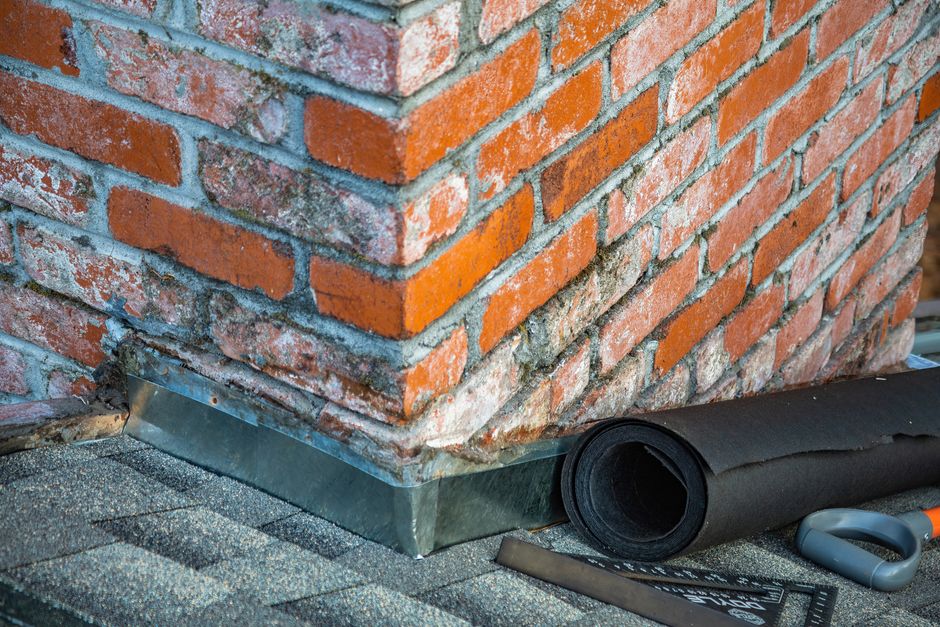
Chimneys are the number one leak source on most homes, and the reason is that a chimney needs three separate things to work together. Step flashing goes up the sides under each shingle course, counterflashing sets into the mortar joint and laps over the step flashing, and a cricket or saddle behind a wide chimney diverts water around it instead of letting it pool. If any one of those is missing or has been replaced with sealant, water gets in.
Around here the cricket matters more than people think, because pine needles and leaf litter pack in behind a chimney and hold moisture against the masonry for weeks. Brick and mortar are absorbent. A chimney can wick water into the house even when the flashing looks fine, which is why waterproofing the masonry is often part of the repair.
Valleys, Sidewalls, and Dormers
Valleys carry the runoff from two slopes at once. During a hard summer downpour a valley moves a startling volume of water, and if the metal underneath is corroded or the shingles were cut too close to the center, that water goes sideways under the courses. Valleys also collect pine straw, which dams the flow and pushes water uphill.
Sidewalls and dormers need proper step flashing, one piece per shingle course, each lapped over the one below. A long continuous strip of metal run up a sidewall is a shortcut, and it leaks. So does siding that was installed tight against the roof deck with no clearance, which traps debris and holds water against the wall.
Pipe Boots and Roof Penetrations
Look at your plumbing vent pipes. The rubber collar around them is neoprene, and neoprene cracks under UV. With summers as long and hot as ours, those boots often fail well before the shingles do, and the crack sits at the top of the collar where you cannot see it from the yard. Small cheap part, lot of drywall damage.
Why Fall Is the Right Time
Our rain pattern changes with the season. Summer storms are violent and brief. Winter rain in South Georgia tends to be slower, steadier, and much longer, sometimes soaking a roof for a day or more at a stretch. That kind of sustained saturation is exactly what exposes a marginal flashing detail. A joint that shrugs off a twenty minute thunderstorm can let water in steadily during an all day February rain.
Fall also gives crews good working conditions. Sealants and flashing cement cure best in moderate temperatures, and the humidity is lower than it is in July. Cooler weather means less afternoon lightning shutting down a job, and it means the crew can work a detail carefully instead of racing a storm cloud.
There is also the debris factor. Pine straw drops heavily in fall and packs into valleys, behind chimneys, and against sidewalls. Clearing it and inspecting the flashing on the same visit is the most efficient maintenance call of the year, and it puts you into the wet season with a clean roof.
What a Flashing Repair Involves
A real flashing repair means lifting shingles and replacing metal, not adding another layer of sealant over the old one. On a chimney, that usually means pulling the shingles along the sides, installing new step flashing woven into the courses, cutting a fresh reglet into the mortar joint for counterflashing, and adding a cricket if the chimney is wide enough to need one. Absorbent masonry then gets a breathable water repellent.
Costs vary with access, roof pitch, chimney size, and whether the deck underneath is still sound. Most straightforward flashing repairs run in a modest range compared to a roof replacement, but the number climbs quickly if water has been getting in long enough to rot decking or framing. That is the real argument for handling it in the fall. Flashing work is cheap. Structural repair is not.
Common Questions About Roof Flashing in Valdosta
How do I know if my leak is coming from flashing?
Look at where the stain sits. Leaks that appear near a chimney, along an interior wall, under a skylight, or in a ceiling below a bathroom vent almost always trace back to flashing. Water travels along rafters before it drops, so the entry point is often uphill of the stain.
Can I just caulk it myself?
Caulk buys you weeks or months, not years, and it makes the eventual repair harder because the next roofer has to scrape it all off. If you need a temporary fix before a storm, fine. Just do not treat it as the solution. The metal underneath is what actually stops water.
How long does roof flashing last?
Good flashing installed correctly can last as long as the roof over it, though the sealant at the joints needs attention every few years. Aluminum and galvanized steel age differently, and copper outlasts both. In our humidity, corrosion is usually what ends a flashing’s service life.
Should flashing be replaced when I get a new roof?
Yes, in almost every case. Reusing old flashing on a new roof is one of the most common corner cuts in the business, and it means your brand new roof has a decade old weak point built into it. Ask specifically whether new flashing is included in any replacement quote.
Why does my chimney leak only during heavy rain?
Wind driven rain hits the vertical face of a chimney and runs down the masonry. In a light rain, the brick absorbs it. In a heavy, sustained rain the brick saturates and water reaches the interior. That points to a counterflashing problem, a missing cricket, or masonry that needs waterproofing.
Get Ahead of the Wet Season
Flashing is not the part of the roof anybody thinks about, and it is the part that most often lets water into the house. Freedom Roofing Pros serves homeowners across Lowndes County and the Valdosta area, and we will check every joint and penetration and tell you what needs metal instead of sealant. If the leak traces back to the chimney, our chimney flashing and waterproofing service handles the metal and the masonry both. Not sure where the water is getting in? Start with professional roof leak detection and we will find it before winter does.