Roof Leak Detection in Hahira, Georgia

Hahira’s tree-lined streets and well-established neighborhoods host homes of varying ages, many with roofs that have weathered decades of South Georgia humidity and seasonal storms. When water shows up on a ceiling or wall in your Hahira home, the instinct is to assume the roof is damaged right above that spot. In reality, roof leaks travel along rafters, under sheathing, and down wall cavities, often entering your home far from where the actual breach is. Finding the true source of a leak requires careful diagnosis, not guesswork.

Freedom Roofing logo

What Lowndes County Weather Does to a Leaking Roof

Lowndes County’s warm, humid climate positions Hahira homes directly in the path of Gulf weather systems, which bring strong seasonal storms and hurricane-remnant wind events. Our area’s mature pine and oak forests shed needles and leaves year-round, clogging gutters, valleys, and drainage paths that should direct water off the roof. The housing stock here spans decades, with roofing materials that harden and crack under prolonged sun and humidity, creating weak points around vent pipes, skylights, flashing transitions, and chimneys. Roof seals degrade, metal flashing corrodes, and standing water behind debris becomes a primary leak driver.

South Georgia humidity turns any leak into mold territory quickly.

Letting a leak go undiagnosed leads to:

  • Active water intrusion and interior finish damage
  • Mold and mildew growth in attic and wall spaces
  • Damaged insulation and higher cooling costs
  • Structural wood rot in decking and rafters
  • Larger repair scope after collateral damage sets in
The sooner you get a leak diagnosed, the smaller the repair usually stays.
Man working roof with drill 23 2148748770

How to Tell If You Have a Roof Leak

Visible water stains on ceilings or walls are real, but they often appear weeks or months after the actual leak began beneath the surface. If you notice discoloration, soft spots, or mold forming in your Hahira home, the breach has likely been active longer than you know.

Discolored patches on your ceiling or walls

In Hahira homes, water stains usually appear in the master bedroom, hallway, or living room, far from where roof water actually entered. Water travels along rafters and decking before finding a weak spot to drip through. By the time you see a stain inside, the roof damage could be several feet away.

Damp insulation or musty smell in the attic

Lowndes County’s humid climate means your attic naturally has some moisture, but active dampness or dark spots in fiberglass insulation signal a leak path. Homeowners often mistake condensation pooling on cooler surfaces for an active leak, when the real problem is roof water finding its way in. We inspect both before jumping to conclusions.

Missing, cracked, or lifted shingles visible from the yard

Hahira’s exposure to storm winds can lift and crack shingles, but you may not spot the damage until water’s already pooling inside. Sometimes a single missing shingle or unsealed seam is the only clue. Even small openings can let wind-driven rain penetrate deep into the roof structure.

Cracked or deteriorating sealant around roof penetrations

The flashing around chimneys, vents, and valleys is the most common source of roof leaks in Lowndes County homes. Sealant degrades faster in our humid climate and under repeated seasonal temperature swings. A failed seal often looks minor from the ground but is the entire leak story.

Water getting inside during heavy rain or high winds

Wind-driven rain can find gaps in your roof system that stay perfectly dry during gentle rains, making it hard to pinpoint the entry point. In Hahira, homeowners often report water appearing suddenly during thunderstorms, then never again. Detecting where wind and water actually got in requires a methodical roof inspection and sometimes diagnostic testing.

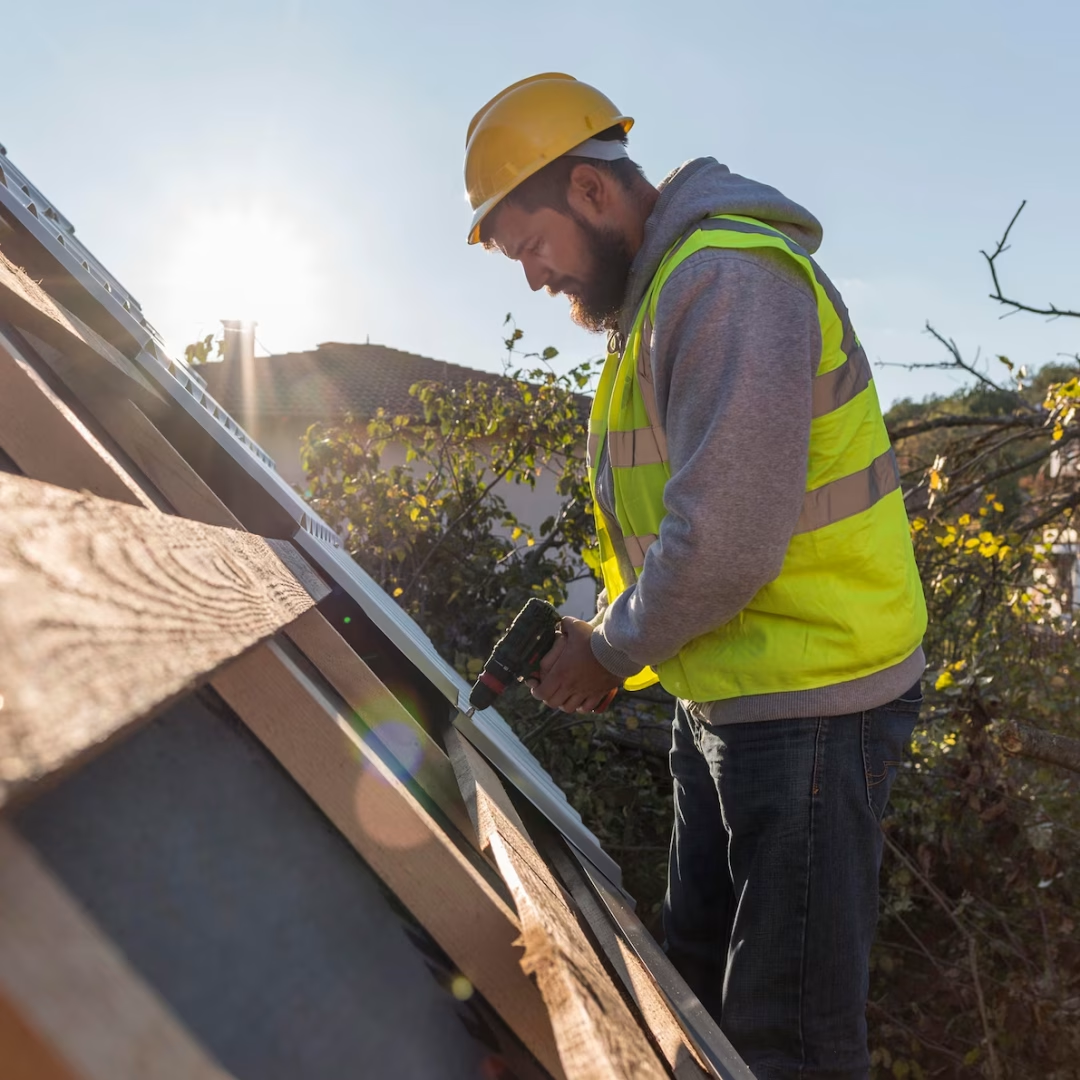
Leaks do not fix themselves. A leak inspection from Freedom Roofing gives you clarity on the source and what it will take to fix it.

What to Expect from a Leak Inspection

Hahira homeowners deserve to know exactly where their roof is leaking and why, not just where the water ended up inside. Our approach is methodical: we inspect from the roof surface down, trace water paths, and pinpoint the true source.

Line 3 1 (1)

Step 1

Step 1. We meet with you and inspect your interior

When you call, we ask specific questions about where water appears, when it started, and whether it follows storms. We then walk your home’s interior, check the ceiling, walls, attic access if available, and trace the path of water staining. This conversation and visual survey give us clues about the leak’s direction and likely source.

Line 3 1 (1)

Step 2

Step 2. We walk your roof and examine all penetrations

We inspect your roof from top to bottom, looking at shingles, flashing, valleys, chimneys, vents, and skylights if present. We check for lifted, cracked, or missing shingles and examine the condition of sealant around all roof penetrations. Patterns often emerge: a cluster of damage, failed flashing, or a valley that collects debris points us toward the leak source.

Line 3 1 (1)

Step 3

Step 3. Diagnostic tools confirm where water is getting in

If visual inspection alone doesn’t reveal the source, we use a moisture meter to identify damp areas on sheathing and fascia. In some cases, we perform a controlled water test, slowly applying water from a garden hose to suspicious areas while watching for entry points. These tests confirm exactly where water is entering so the repair is precise and effective.

Line 3 1 (1)

Step 4

Step 4. We deliver a detailed written report

You get a written summary of our findings, photographs of problem areas, and a clear explanation of the leak source. We recommend whether the appropriate fix is a targeted repair, resealing flashing, or replacing a small section of shingles, or whether larger work is needed. We outline your options and let you decide what makes sense for your home and budget.

Freedom Roofing logo

What a Full Roof Leak Detection Includes in Hahira

In Lowndes County, we deliver leak inspections that identify the true source, not just the visible symptom.

A thorough roof leak detection service in Lowndes County involves much more than a quick look.

  • Interior ceiling, wall, and attic visual inspection to trace water staining patterns
  • Attic access and insulation assessment for signs of active moisture
  • Complete exterior roof inspection, including all shingle surfaces and roof edges
  • Detailed examination of flashing and sealant condition at chimneys, vents, and skylights
  • Inspection of roof penetration seals and deck-to-roof connections
  • Valley debris clearance and assessment for water pooling or debris buildup
  • Gutter and downspout evaluation for proper drainage and blockages
  • Moisture meter testing on sheathing, fascia, and soffit where appropriate
  • Targeted water testing to confirm suspected leak entry points
  • Photographic documentation of all findings and problem areas
  • Written findings report with clear explanation of leak source and path
  • Repair recommendations with options, from targeted sealing to larger work as needed
Our work throughout Lowndes County speaks for itself. When we identify a leak source, the repair holds because it addresses the actual problem.

The Freedom Roofing Standard, What Hahira Property Owners Know

Line 3 1 (1)

We Know This Area

We understand how Lowndes County’s climate and building landscape create specific leak patterns. Over time, we’ve traced countless leaks on Hahira roofs back to the same failure points: valley blockages, corroded flashing where additions meet the main roof line, undersized gutters on older homes, and deteriorated seals around mechanical penetrations. We know the difference between diagnosing leaks on a 1960s ranch home versus more recent construction, and where water actually travels before showing up inside.

Line 3 1 (1)

Honest Diagnosis

We tell you what your leak actually needs, even when that’s a simple targeted repair instead of a full roof replacement. Some homeowners worry we’ll oversell them on a bigger job, but we’d rather keep your trust by being straightforward. A properly diagnosed and targeted repair often outlasts a half-measure, and that matters more to us than the size of the invoice.
Line 3 1 (1)

Materials Built for This Climate

For post-detection repairs, we use durable sealants and flashing materials that hold up to Lowndes County’s humidity and temperature swings. Quality matters in our climate: cheaper sealants harden and crack faster, and thin flashing rusts within a few years. We source materials built to last in conditions like ours, not generic products rated for every region.
Line 3 1 (1)

Skilled Diagnosticians

Our crews are trained in systematic leak tracing, not guesswork. We move methodically from interior clues to exterior pattern to diagnostic confirmation. Every Hahira-area inspection benefits from our local experience and a discipline about not assuming the most visible damage is the actual source. That approach catches leaks others miss.
Freedom Roofing logo

Freedom Roofing's Lowndes County Coverage

We’re based in Thomasville and serve Hahira and the surrounding Lowndes County area with consistent, methodical leak detection. Whether your home sits near historic downtown Hahira or in the quieter residential zones across the county, you get the same careful diagnostic process. Our local presence means we understand how Lowndes County weather patterns, the age of housing stock here, and local building practices shape roof vulnerability. We bring that expertise to every job, from the first inspection to the final diagnosis.

In addition to Hahira, our crews regularly work in Remerton, Lake Park, Dasher. Every job across Lowndes County gets the same replacement standard.

Find the Source Before the Damage Spreads

If you’re seeing water damage in your Hahira home, the sooner you pinpoint the leak source, the sooner you can prevent further interior damage, structural deterioration, and mold growth. Roof leaks don’t stay small. Contact us to schedule a leak detection inspection, and we’ll give you a clear answer about what’s happening and where the water is actually coming from.