
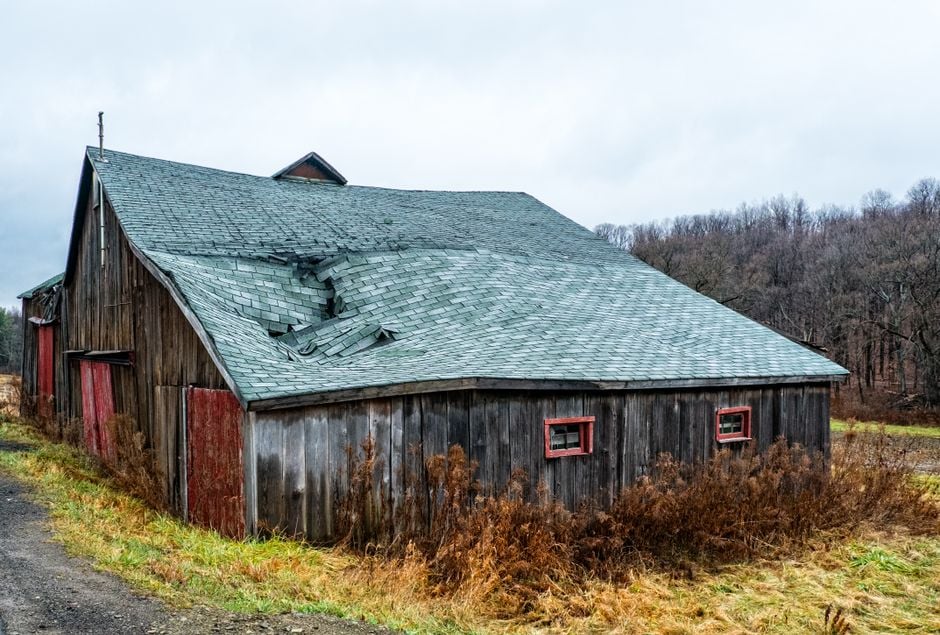
A line of storms rolls through Centerville, the wind picks up for fifteen minutes, and the next morning you find shingle grit washed out at the bottom of your downspouts. Now you are staring at an insurance policy you have never used and wondering what happens next. Here is how a first roofing claim actually goes, start to finish.
What Storm Damage Looks Like on a Centerville Roof
Middle Georgia gets hit from two directions. Spring and summer bring fast, violent thunderstorms with hail and straight line wind. Late summer into fall brings the leftovers of tropical systems that track inland from the Gulf and dump rain for a day and a half. Both leave marks, and the marks look different.
Hail
Hail bruises asphalt shingles. The strike knocks the granules loose and dents the mat underneath, and that soft spot is where the shingle starts to fail a year or two later. Fresh hail hits look like dark circles with a slightly spongy feel, scattered randomly across the slope. You will often see the same round dings on soft metal first, so check your gutters, downspouts, roof vents, and the fins on your outdoor AC unit. If the metal is dimpled, the roof took hits too.
Wind
Wind damage is easier to spot from the ground. Look for shingles that are lifted at the edge, curled back, creased across the middle, or missing entirely. Creasing matters even when the shingle stays put, because the seal strip has already broken and the next storm finishes the job. Around here you also get impact damage from pine limbs, and a dropped limb can puncture decking. That hole hides under the shingle until it rains hard enough to find it.
What to Do in the First Few Days
Start with photos. Walk the yard and shoot everything from ground level with your phone, including the debris in the yard, the granules in the gutters, any dented metal, and any interior stains on ceilings or in the attic. Timestamped photos taken right after the storm are the strongest thing you can hand an adjuster later. Do not climb up there yourself. Wet shingles are slick, storm damaged decking can be soft, and no photo is worth the fall.
Next, stop active water. Get a bucket under the leak, pull furniture back, and cut a small relief hole in a bulging ceiling so the water drains in one spot instead of collapsing the drywall. Emergency tarping counts as reasonable mitigation under most policies, and your insurer expects you to prevent further damage. Keep every receipt.
Then call a roofer for an independent look before you file. A real inspection tells you whether you have storm damage worth a claim or ten years of sun beaten shingles that a claim will not cover. Filing on a roof that is simply worn out puts a claim on your record for nothing.
How the Claim Process Runs
You open the claim by phone or through your insurer’s app, give the date of loss, and describe what you found. If you are not sure of the date, use the day of the storm you believe caused it. You will get a claim number and an adjuster assignment, usually within a few days. After a widespread hail event that timeline stretches, because everyone in Houston County called the same week.
The adjuster comes out and inspects the roof. Have your contractor there for that visit. A roofer who can point out a creased shingle course or a bruised field of hail hits in person saves a lot of back and forth later. The adjuster writes the estimate from what they document, so what gets documented is the whole ballgame.
If the claim is approved, most policies pay in two parts. You get an initial check for the actual cash value, which is the repair cost minus depreciation and minus your deductible. After the work is finished and the final invoice goes in, you get the recoverable depreciation released. That surprises a lot of first time claimants, because the first check looks far too small to replace a roof. It is not the whole payment. It is the first half.
Where First Time Claimants Get Tripped Up
The biggest one is waiting. Policies carry deadlines for reporting a loss, and beyond the paperwork, a six month old wind lift is hard to tie to a specific storm. Damage also gets worse quietly. Water that gets past a lifted shingle soaks decking and insulation long before it stains a ceiling, and once the insurer can argue the damage grew because you sat on it, part of it becomes your problem.
The second is signing with whoever knocks on the door first. Big storms draw crews from out of state who work fast, collect the insurance money, and are long gone when a seam opens up in the spring. Ask where the company is based and read what you sign. A contract that assigns your claim benefits to a contractor hands over more control than most homeowners realize.
The third is expecting the claim to move without you. Keep a simple log of every call, the date, and who you spoke with. Ask for the adjuster’s estimate in writing and send it to your roofer to review line by line. Missing items are common, and they are far easier to add while the claim is still open.
Common Questions About Storm Damage Claims in Centerville
Will filing a roof claim raise my insurance rates?
A single storm claim is treated differently from an at fault claim, and weather losses are common across Houston County. Rates depend on your carrier, your history, and county wide loss patterns after a big event. Ask your agent directly about your policy before you file so you are deciding with real information.
How long do I have to file after a storm in Centerville?
Most policies require prompt notice, and many set a firm outside limit measured in months or a year or two from the date of loss. Check your specific policy language. Practically speaking, file within a few weeks. The longer you wait, the harder the storm connection is to prove.
What if my claim gets denied?
A denial is not always the end. You can request the full inspection report, get a second opinion from a roofer, and ask for a reinspection with new documentation. Many denials come down to something that was simply not photographed the first time around, especially on a steep or heavily shaded slope.
Can I just get a repair instead of a full replacement?
Often yes. Isolated wind damage on one slope is repairable, and matching existing shingles is usually possible on a roof under ten years old. Widespread hail bruising across every slope is a different story, because the whole surface has been compromised even where it still looks fine.
Do I have to use the contractor my insurer recommends?
No. You choose who works on your house. Preferred vendor lists exist for convenience, not obligation. Pick a local contractor who will meet the adjuster, document the damage thoroughly, and still be reachable in Centerville when you have a question two winters from now.
Ready to Find Out What Your Roof Took?
If a storm just came through your neighborhood, get eyes on the roof before you call anyone else. Freedom Roofing Pros covers roofing in Centerville and Houston County, and we will tell you straight whether you have a claim or a maintenance item. Schedule a storm damage assessment and we will document everything, meet your adjuster on site, and walk you through the paperwork. If the damage is minor, our roof repair crew can handle it without a claim at all.