
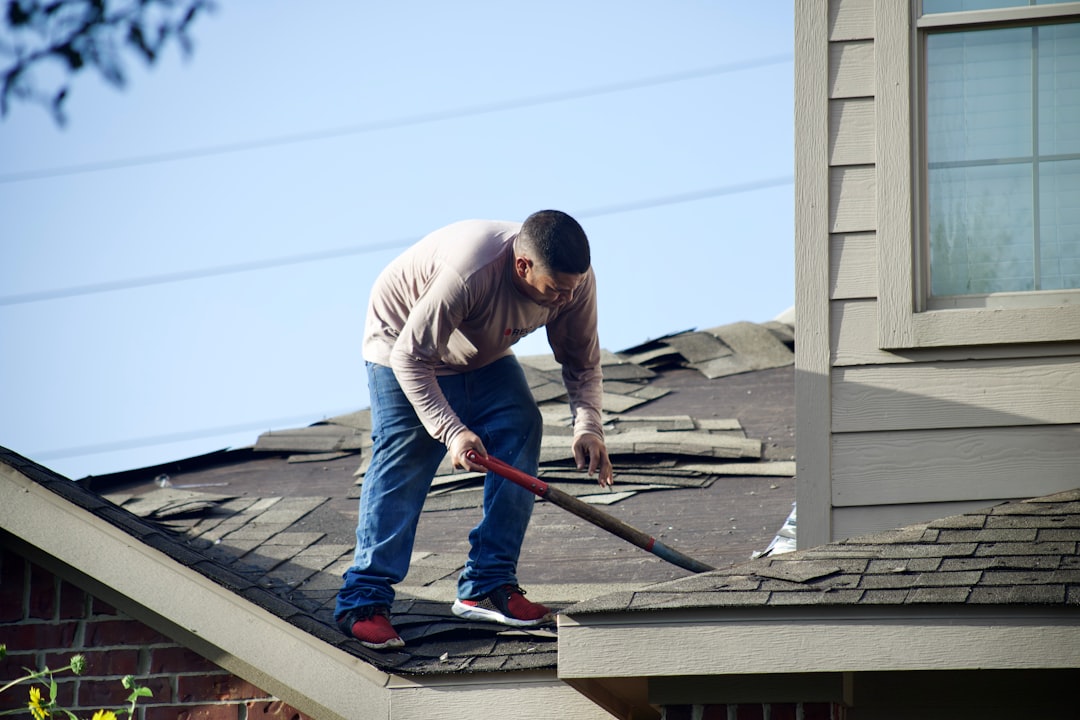
After a storm rolls through Centerville, most roofs look fine from the driveway. That is the problem. Hail bruising, lifted shingle seals, and cracked flashing are hard to see from the ground, and the damage they cause tends to show up months later as a stain on a ceiling. Here is what an actual post-storm roof inspection covers in Houston County, step by step.
Before Anyone Gets on the Roof
A good inspection starts on the ground and inside the house. We walk the perimeter first and look at what the storm did at the edges, because the edges tell the story. Dented gutters and downspouts, dinged vent hoods, damaged window screens, and dings on the AC condenser fins all point to hail and give a sense of the stone size that came through. If those metal surfaces are clean, hail probably was not the main event, and we shift our attention to wind.
We also look for granules. Asphalt shingles shed their mineral surface when they take impact, and those granules collect at the bottom of downspouts and in gutter corners. A handful of loose granules is normal on an aging roof. Piles of them after a specific storm mean something happened up there.
Then we check the yard for debris. Middle Georgia has pines everywhere, and a limb strike leaves a different signature than hail. Knowing which one you are dealing with changes what we are looking for once we climb.
The Roof Surface, Point by Point
This is the part that takes the longest, and it should. Walking a roof properly means covering every slope, not photographing one side and calling it done.
Shingles
We look for missing shingles, lifted or curled edges, and shingles where the sealant strip has broken loose. Wind damage often is not a shingle blown off the roof. It is a shingle that got lifted, broke its seal, and laid back down looking normal. The next hard rain drives water underneath it. We check by hand along the leading edges and around anything that creates turbulence.
For hail, we look for bruises, which are soft dark spots where granules were knocked away and the mat underneath took an impact. Bruises are found by touch as much as by eye. Middle Georgia summers are brutal on asphalt shingles, and a roof that has already been baked for a decade bruises much more easily than a newer one, so age is part of the assessment.
Ridges, Hips, and Valleys
Ridge and hip caps take the worst of the wind because they sit at the highest, most exposed line on the roof. Cracked, lifted, or missing caps are common after a storm and are a direct path for water. Valleys get checked for debris packing, worn metal, and shingle wear where two planes dump water into one channel. Around here, valleys full of pine straw are one of the most reliable causes of leaks that have nothing to do with the storm at all.
Flashing and Penetrations
Every hole in your roof is a potential leak, and every one of them gets checked. That means the chimney flashing and counterflashing, plumbing vent boots, attic and bathroom vents, satellite dish mounts, skylights, and any place a wall meets a roof plane. Rubber pipe boots crack from years of Georgia sun long before the shingles wear out, and they are one of the most common leak sources we find. Chimney flashing is a close second, especially where old sealant has dried out and pulled away from the masonry.
Drainage and Edges
We check the drip edge, the condition of the fascia, and whether gutters are still pitched correctly and firmly attached. Storms shift gutters. A gutter that has pulled loose at one end dumps water against the fascia and siding every time it rains hard, which in Centerville is often.
What the Attic Tells Us
Half of a good roof inspection happens from inside. We go into the attic with a flashlight and look for daylight through the decking, wet or matted insulation, staining on rafters and decking, and any active drips. We also look at the underside of the decking around every penetration, because that is where a small failure shows itself first.
Moisture in an attic is not always a leak. High humidity is a fact of life in Middle Georgia, and poor attic ventilation traps that moisture, which rots decking and shortens shingle life from below. If we find condensation, mold growth on the sheathing, or rusted nail tips, ventilation is part of the conversation whether or not the storm caused it.
What You Should Get at the End
An inspection is only useful if it produces something you can act on. You should get photos of everything that was found, with enough context to know where on the roof each one is. You should get a plain description of what failed, what caused it, and whether it is storm-related or age-related. Those are different findings and they lead to different next steps.
You should also get a straight answer on urgency. Some findings need a repair this week. Some can be watched. And if the damage looks storm-related, the report should be organized in a way that an insurance adjuster can follow, with dates, slope-by-slope notes, and measurements. That documentation is often the difference between a claim that gets paid properly and one that gets underpaid.
Common Questions About Roof Inspections in Centerville
How soon after a storm should I get my roof inspected?
Within a week or two if you saw hail or strong wind in Centerville, sooner if you have any interior staining. Waiting lets small openings turn into wet decking, and it also makes it harder to tie the damage to a specific storm date if you end up filing a claim.
How long does a roof inspection take?
Usually somewhere around an hour for a typical Centerville home, longer for steep or complex roofs with multiple valleys and dormers. The attic portion adds time. If someone is done in fifteen minutes, they did not walk every slope or look inside.
Will an inspection damage my roof?
No, when it is done properly. Experienced inspectors know where to step, work with the shingle courses rather than against them, and stay off the roof entirely when shingles are hot and soft in mid-afternoon summer heat, which is when foot traffic actually causes marring.
My roof looks fine from the ground. Do I still need an inspection?
Usually yes after a real storm. Hail bruising and broken shingle seals are close to invisible from the driveway, and they are exactly the kind of damage that leaks eight months later. A quick check now is cheaper than repairing decking and drywall later.
What is the difference between a storm inspection and a regular one?
A regular inspection focuses on wear, aging, and maintenance items. A storm inspection does all that plus documents impact evidence, wind damage patterns, and event dates in a format built for an insurance claim. Both walk the same roof, but the reports serve different purposes.
Schedule an Inspection in Centerville
If a storm has moved through and you are not sure what it left behind, the fastest way to find out is to have someone walk it. Freedom Roofing Pros covers roofing in Centerville and Houston County, and our roof inspection service includes the full slope-by-slope walk, the attic check, and a written report with photos. If the inspection points to your chimney, which it often does on older homes here, our chimney flashing and waterproofing work addresses the most common leak point we find.